Vibe Coder · Unit 2: How Claude and ChatGPT Work · Lesson 4 of 7
Catching made-up answers
Why models state false things with confidence, where it happens most, and four habits that catch it before it ships.
Read the short notes and pictures.Do everything inside a blue frame.
Confident, fluent and wrong
Sometimes a model states something false with complete confidence: a statistic nobody measured, a quote nobody said, a link to a page that does not exist. This is called a hallucination. The model is not lying, and it is not broken. It is writing what sounds likely, and here the likely thing was not the true thing.
Where it happens most
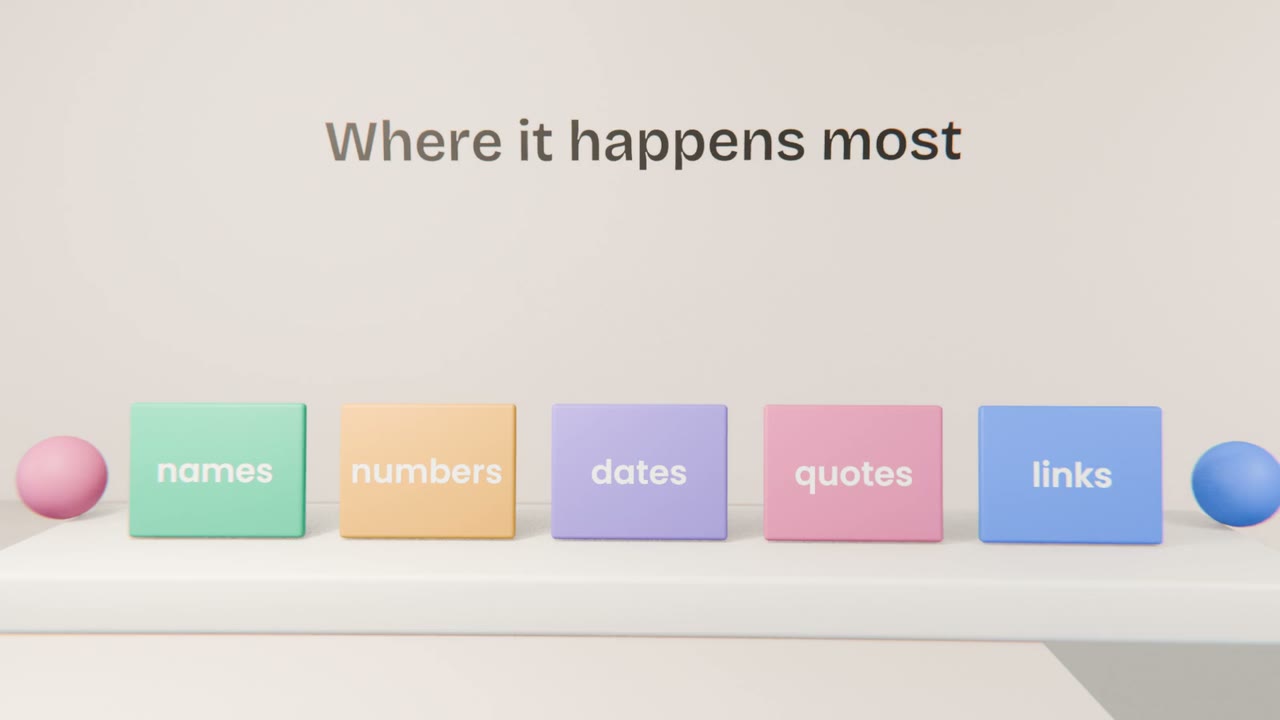
Exact facts
Names, numbers, dates and prices. General ideas are safer than specific figures.
Quotes and sources
Words attributed to a real person, titles of studies, and web addresses.
Small or obscure subjects
A local company, a new tool, a niche library. The less text there was to learn from, the more it guesses.
Things after its cutoff
Anything recent, answered without search.
Code details
A function or setting that sounds right but does not exist in the version you are using.
Four habits that catch them
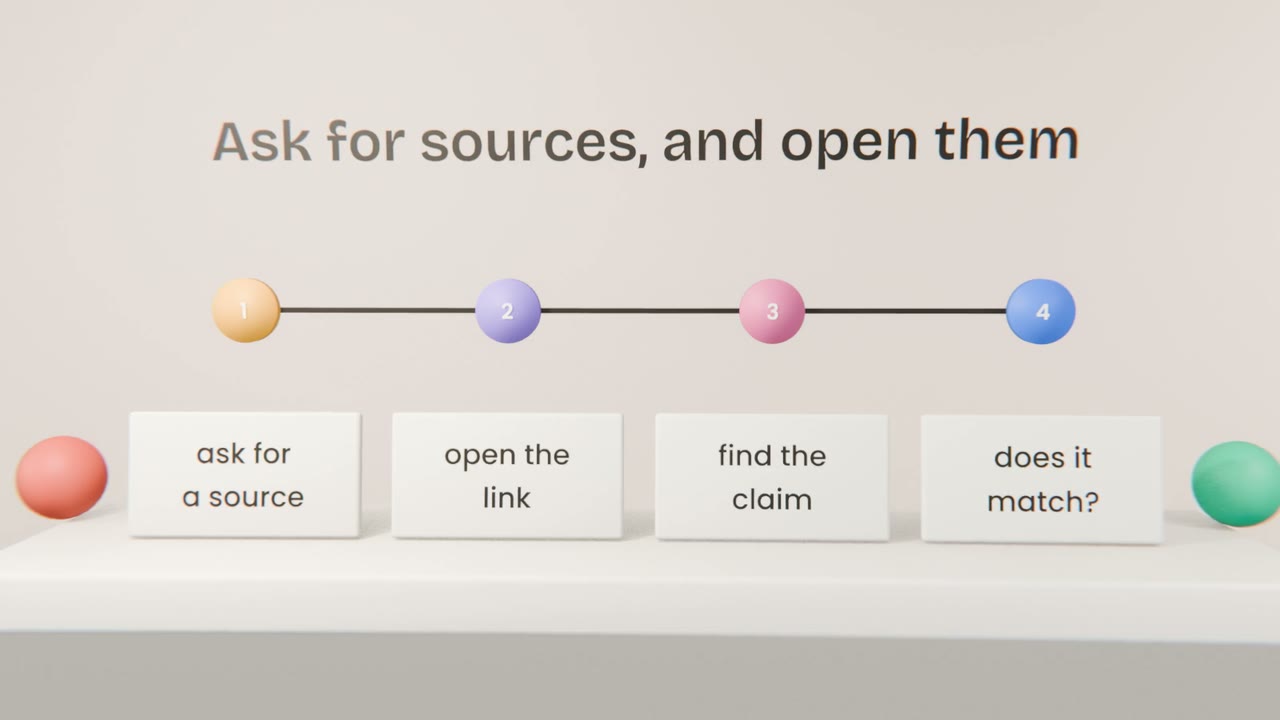
Ask for sources, and open them
With search on, ask for links. Open each one and find the claim on the page. A real link that does not say what the answer says is still a made-up answer.
Give it the document
Attach the report or paste the text, and say "answer only from this, and quote the passage you used".
Let it be unsure
Add "if you are not sure, say so". A model told it may be unsure guesses less.
Run it
For code, the test is whether it works. Run it, click through it, and paste any error back.
Invites a guess
What was our churn rate last quarter?
Grounded
Using only the attached report, what was our
churn rate last quarter? Quote the line you
used. If the report does not say, tell me.
What to trust it with
Trust for a start
Drafts, outlines, explanations, options and first versions of code.
Check before it ships
Any fact, figure, quote or link that will be seen by a customer, a manager or the public.
Always yours
The decision, and the responsibility for what goes out under your name.
Fact-check the brief
Go through the brief and mark every number, name, price and quote. For each one, find it on a real page, or delete it. Then ask ChatGPT to read the brief and list anything it cannot confirm.
Done when
A brief you have checked is one you can show to a manager or a client.
Keep these
- A hallucination is a false answer stated with confidence.
- It happens most with names, numbers, dates, quotes, links and obscure subjects.
- Ask for sources and open them, give it the document, and let it say it does not know.
- Trust it for a draft, and check it before it ships.