Vibe Coder · Unit 6: Thinking in Products · Lesson 1 of 9
Start from a problem
Products that last solve a real problem for real people. How to state yours in one sentence and test whether it is real.
Read the short notes and pictures.Do everything inside a blue frame.
Problems before products
AI makes building easy, which makes it easy to build the wrong thing. The products that survive begin with a problem that real people have often enough, and painfully enough, to want it solved.
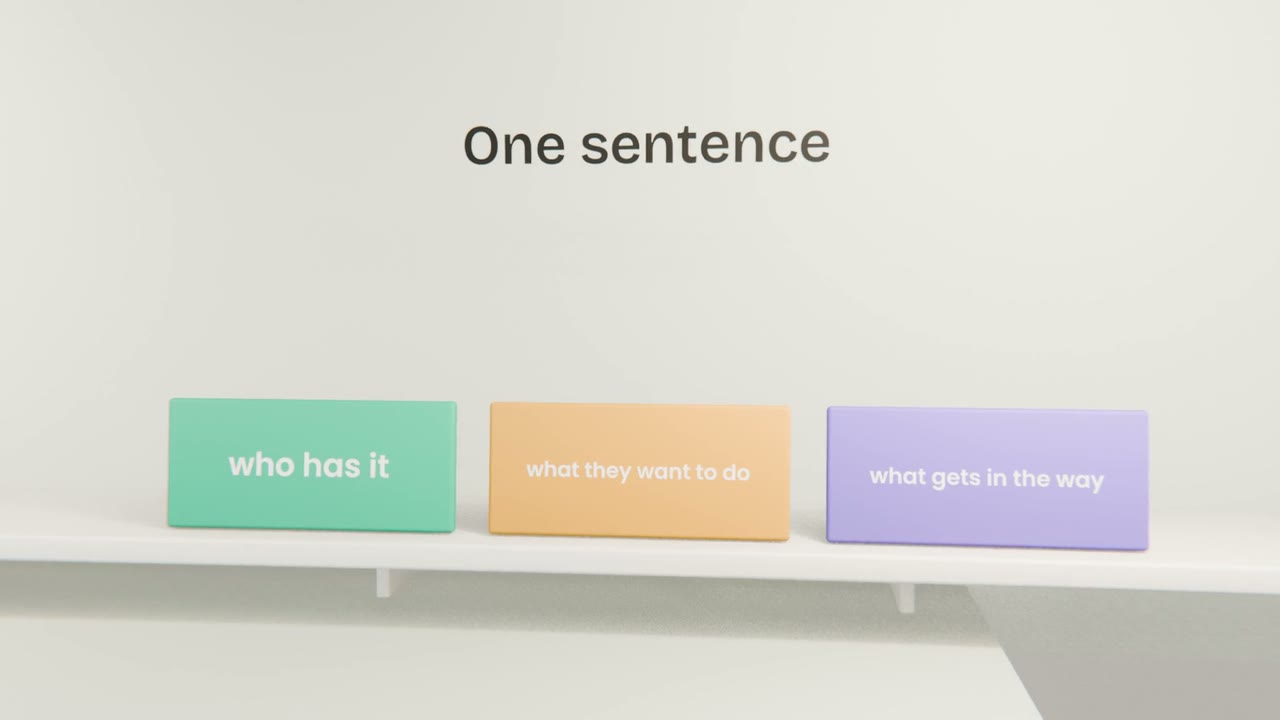
The problem sentence
Name the people
Not "users". "Freelance designers who invoice five or more clients a month."
Name the job
What they are trying to get done.
Name the obstacle
What makes it slow, costly or stressful today.
Read it to one of them
If they nod, keep going. If they shrug, keep looking.
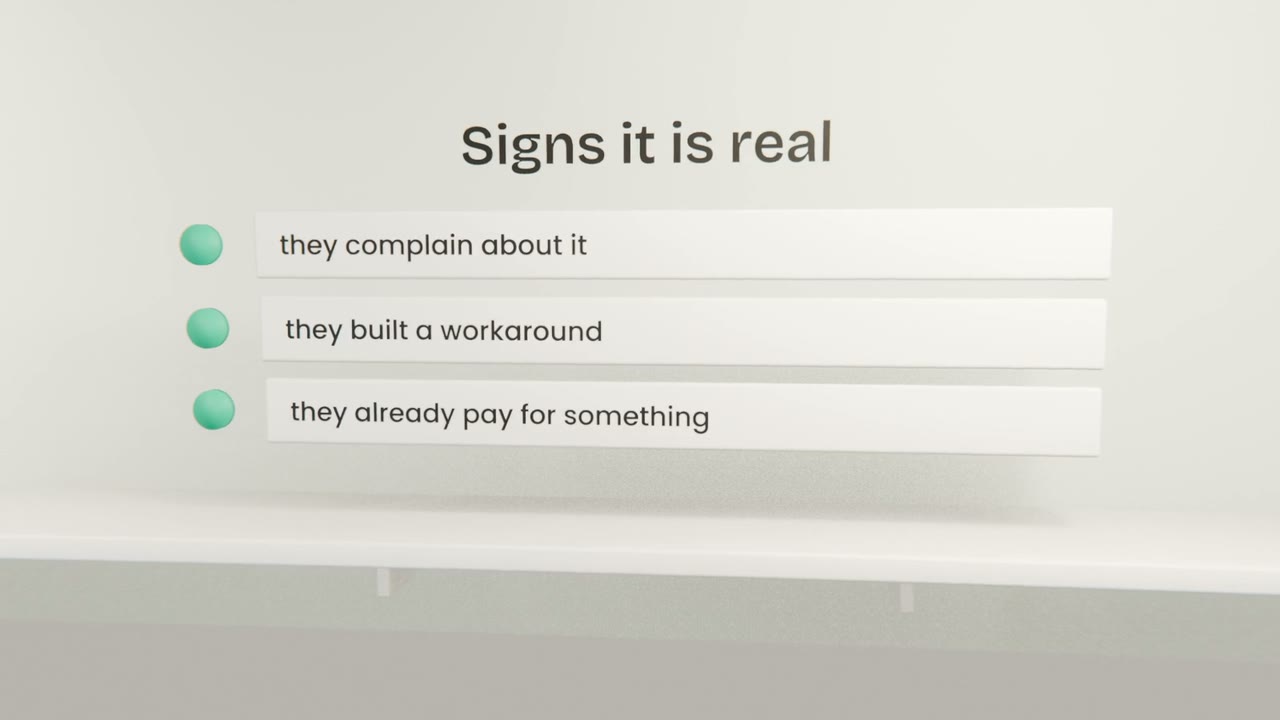
Is it real?
Frequency
Does it happen weekly, or once a year?
Pain
What does it cost them in time, money or worry?
Workarounds
A spreadsheet or a reminder note is proof they care.
Write your problem sentence
Using your research and competitor gap, write your problem in one sentence. Read it to three people who might have it and note their exact words. Start a document called "Product spec" with the sentence and their reactions.
Done when
Everything else in the spec follows from this sentence.
Keep these
- Start from a problem, not a feature list.
- State it in one sentence.
- Look for frequency, pain and workarounds.